Monolithic vs Floating Concrete Slabs: Which Is Better for Ocala Homes?
When planning a residential concrete slab project in Ocala, Florida, one of the most important decisions homeowners face is choosing the right slab type. Two of the most common options are monolithic slabs and floating slabs. While both serve specific purposes, they are not interchangeable, and choosing the wrong type can lead to performance issues, unnecessary costs, or future repairs.
This guide explains the differences between monolithic and floating concrete slabs, how each performs in Ocala’s conditions, and how to decide which option makes the most sense for your home. It also builds on our detailed guide to residential concrete slabs in Ocala, which covers slab uses, costs, and installation fundamentals.
At C1 Foundations, we help homeowners choose slab solutions based on real-world use, soil conditions, and long-term reliability rather than assumptions or shortcuts.
Understanding the Two Main Slab Types
Before comparing the two options, it helps to understand what defines each slab type.
What Is a Monolithic Concrete Slab?
A monolithic slab is poured as a single, continuous piece of concrete. The slab surface and the thickened footing edges are formed and poured at the same time. This creates an integrated system where the slab and footing act together to support loads.
Monolithic slabs are commonly used for:
- Garages
- Home additions
- Structural foundations
Because the footing is built into the slab, monolithic pours require careful layout, excavation, and reinforcement planning before the concrete is placed.
What Is a Floating Concrete Slab?
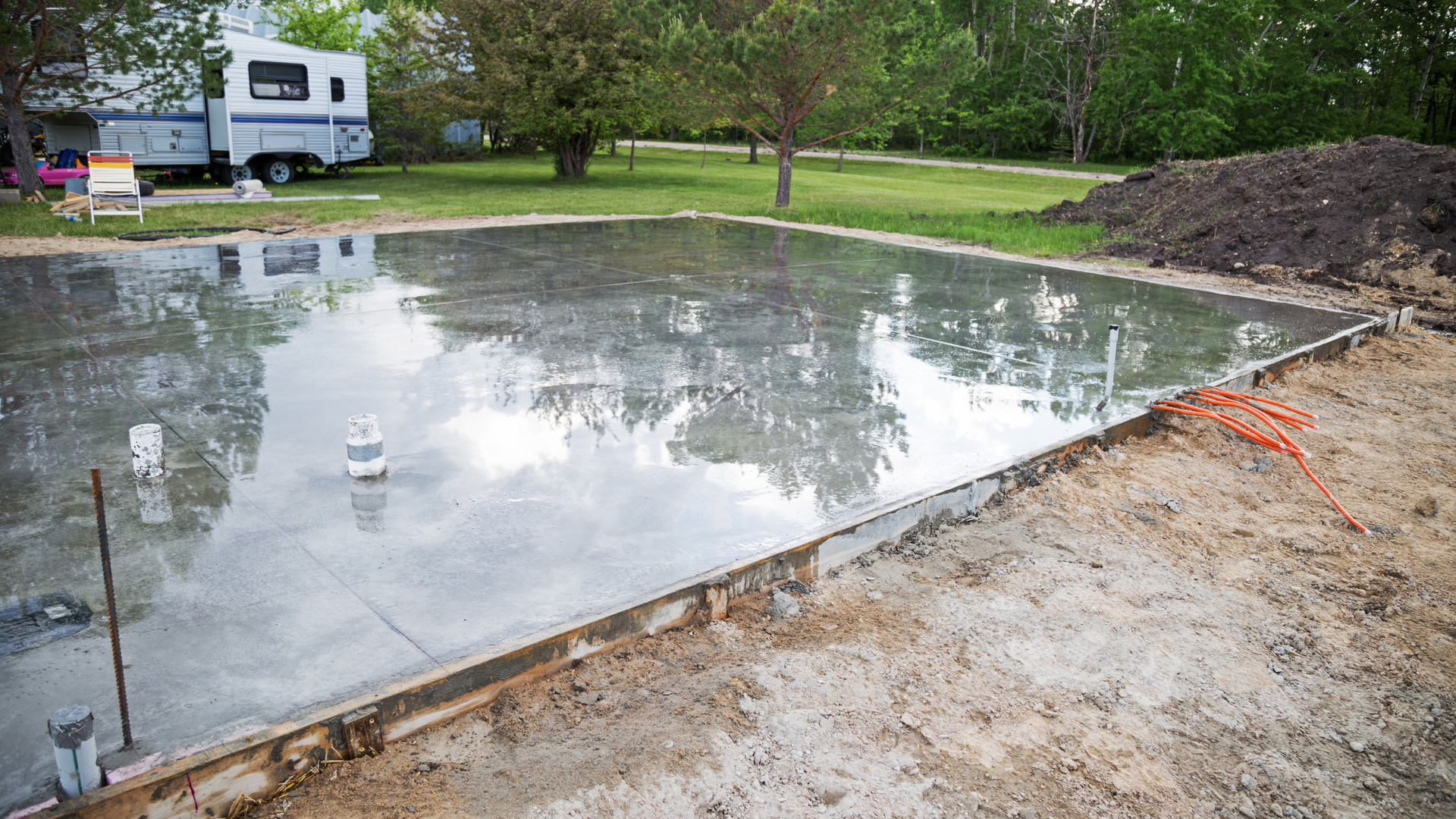
A floating slab is a flat slab that rests on a compacted gravel base without deep footings. It “floats” on top of the prepared base rather than being anchored below the frost line or tied into structural footings.
Floating slabs are commonly used for:
- Sheds
- Workshops
- Utility buildings
- Detached backyard structures
Floating slabs are generally simpler and faster to install, but they are not designed to support structural loads.
Key Differences Between Monolithic and Floating Slabs
Understanding the technical and functional differences between these slab types helps homeowners make informed decisions.
Structural Support
Monolithic slabs are designed to support structural loads such as walls, vehicles, and additions. The integrated footing provides extra strength where loads are transferred to the ground.
Floating slabs are not intended to support structural walls or heavy loads. They are best suited for non load-bearing structures.
Excavation and Preparation
Monolithic slabs require deeper excavation along the perimeter to accommodate thickened edges and reinforcement. This often increases labor and planning requirements.
Floating slabs require less excavation and are typically placed on a compacted gravel base, making them quicker to prepare.
Cost Considerations
Monolithic slabs generally cost more due to:
- Increased excavation
- Additional concrete volume
- Reinforcement requirements
Floating slabs are usually more budget-friendly, especially for small or detached structures.
Homeowners comparing pricing should also review concrete slab cost in Ocala, where slab thickness, reinforcement, and site prep are explained in detail.
Permits and Inspections
Monolithic slabs often require permits and inspections, especially when supporting structures or additions.
Floating slabs may not require permits in all cases, depending on size and intended use. Local regulations still apply, so verification is always recommended.
How Ocala Conditions Affect Slab Choice
Local conditions play a major role in slab performance.
Soil Conditions
Ocala soil conditions vary across neighborhoods. Proper compaction and base preparation are critical for both slab types, but especially for floating slabs that rely entirely on surface support.
Monolithic slabs distribute weight more evenly due to integrated footings, which can help mitigate soil movement.
Moisture and Drainage
Florida’s moisture levels and rainfall patterns make drainage a priority. Both slab types benefit from proper grading and gravel bases, but poor drainage has a greater impact on floating slabs.
Monolithic slabs typically perform better in areas with higher moisture due to their structural design.
Long-Term Use
If a structure may be expanded or converted later, a monolithic slab often provides better flexibility. Floating slabs are best when the use is clearly defined and unlikely to change.
Best Uses for Monolithic Concrete Slabs
Monolithic slabs are the preferred choice for:
Garages
Garage slabs must support vehicle loads, foot traffic, and storage. Thickness, reinforcement, and integrated footings make monolithic slabs ideal.
Garage slabs also connect directly to driveway installations, making coordination with concrete driveway installation in Ocala especially important.
Home Additions
Room additions require slabs that can support walls and tie into existing structures. Monolithic slabs provide the stability needed for long-term performance.
Structural Foundations
Any residential application that carries significant load benefits from a monolithic slab design.
Best Uses for Floating Concrete Slabs
Floating slabs are best suited for:
Sheds and Workshops
Detached sheds and workshops typically do not require structural footings. Floating slabs provide a level, durable base without unnecessary excavation.
Utility Buildings
Outdoor storage buildings and light-use structures often perform well on floating slabs when properly prepared.
Cost-Sensitive Projects
When budget is a concern and the structure does not require structural support, floating slabs offer a practical solution.
Slab Thickness and Reinforcement Considerations
Regardless of slab type, thickness and reinforcement play a major role in performance.
Typical guidelines include:
- 4 inches for light-use floating slabs
- 5 to 6 inches for monolithic garage slabs
- Reinforcement with wire mesh or rebar where loads are present
Skipping reinforcement or reducing thickness to save money often leads to cracking and premature wear.
Common Mistakes Homeowners Make When Choosing a Slab Type
Some of the most common issues we see include:
- Using a floating slab where structural support is required
- Underestimating load requirements
- Skipping proper base preparation
- Not planning for future use changes
These mistakes can lead to costly repairs or replacement.
Can a Floating Slab Be Upgraded Later?
In most cases, a floating slab cannot be converted into a structural slab without removal and replacement. If there is any chance the structure will be expanded or used differently in the future, a monolithic slab may be the better long-term option.
Comparing Long-Term Performance
Monolithic slabs typically offer:
- Greater load capacity
- Better long-term stability
- More flexibility for future changes
Floating slabs offer:
- Faster installation
- Lower upfront cost
- Suitable performance for light-use structures
The best choice depends on use, not preference alone.
How This Choice Affects Overall Project Cost
While floating slabs cost less upfront, choosing the wrong slab type can result in higher long-term costs. Repairing or replacing a slab is significantly more expensive than installing the correct slab from the start.
Homeowners comparing options should consider both concrete slab cost in Ocala and long-term performance when deciding.
Why Professional Guidance Matters
Choosing between monolithic and floating slabs requires more than online research. Soil conditions, drainage, load requirements, and future plans all matter.
Working with a contractor experienced in residential concrete slabs in Ocala ensures the slab is designed for local conditions and real-world use.
Making the Right Choice for Your Ocala Home
To decide between a monolithic or floating slab, homeowners should consider:
- What the slab will support
- Whether the structure may change in the future
- Soil and drainage conditions
- Budget and long-term goals
Clear planning helps avoid unnecessary costs and performance issues.
Work With a Residential Concrete Slab Contractor in Ocala
Concrete slab decisions affect the performance of garages, additions, sheds, and outdoor structures. Choosing the right slab type from the start protects your home and your investment.
C1 Foundations works with homeowners throughout Ocala to design and install residential concrete slabs based on local conditions and intended use.
If you are planning a concrete slab project and want guidance on whether a monolithic or floating slab is right for your home, contact C1 Foundations to schedule a consultation.