Why Does Concrete Crack in Florida? Causes and How to Prevent It
You noticed a crack running across your driveway, patio, or walkway, and now you're standing over it wondering two things: why did this happen, and do I need to repair it or replace the whole slab?
If you own property in Ocala or anywhere in Central Florida, you're not alone. Cracked concrete is one of the most common problems homeowners here deal with, and the reasons have almost everything to do with our specific soil, heat, and rain.

The good news is that most cracks tell a story. Once you understand what caused a crack, you can tell the difference between a harmless surface line and a warning sign of something happening under the slab. This guide walks through why concrete cracks in Florida, which cracks matter and which don't, how to decide between a repair and a full replacement, and the steps that actually prevent cracking when concrete is poured the right way.
First, Understand This: Almost All Concrete Cracks Eventually
Before you panic, it helps to know that concrete is strong in compression but weak in tension. That means it holds tremendous weight pressing down on it, but it pulls apart easily when forces stretch it sideways. As concrete cures, dries, heats up, cools down, and carries the weight of vehicles, it's constantly under stress. Some hairline cracking over the life of a slab is normal and expected.
What separates a cosmetic crack from a structural problem is width, depth, movement, and cause. A thin surface line that hasn't moved in years is very different from a crack that's getting wider, has uneven edges (one side higher than the other), or runs clean through the slab. The rest of this article helps you read those signals and understand why Ocala's environment makes some cracks far more likely than others.
Why Concrete Cracks in Florida: The Local Culprits
Generic advice about concrete cracking applies everywhere. But Marion County has its own combination of sandy soil, mature trees, and brutal summer heat that puts our slabs under stress you wouldn't see in a cooler, rockier climate. These are the causes that matter most for Ocala homeowners.
1. Sandy Subgrades and Heavy Summer Rain
Central Florida sits on sandy, loose soil, and that soil is the foundation your concrete rests on. Sand shifts and washes easily. During our intense summer downpours, water moves through and around the subgrade, carrying fine material away and leaving hollow voids beneath the slab.
Here's why that's a problem: concrete needs continuous, even support from below. When a void opens up under a section of your driveway and a vehicle rolls over that unsupported spot, the slab has nothing holding it up, so it flexes, and then it snaps. This is one of the most common reasons driveways develop cracks that seem to appear "out of nowhere." The crack isn't random. The support under it disappeared.
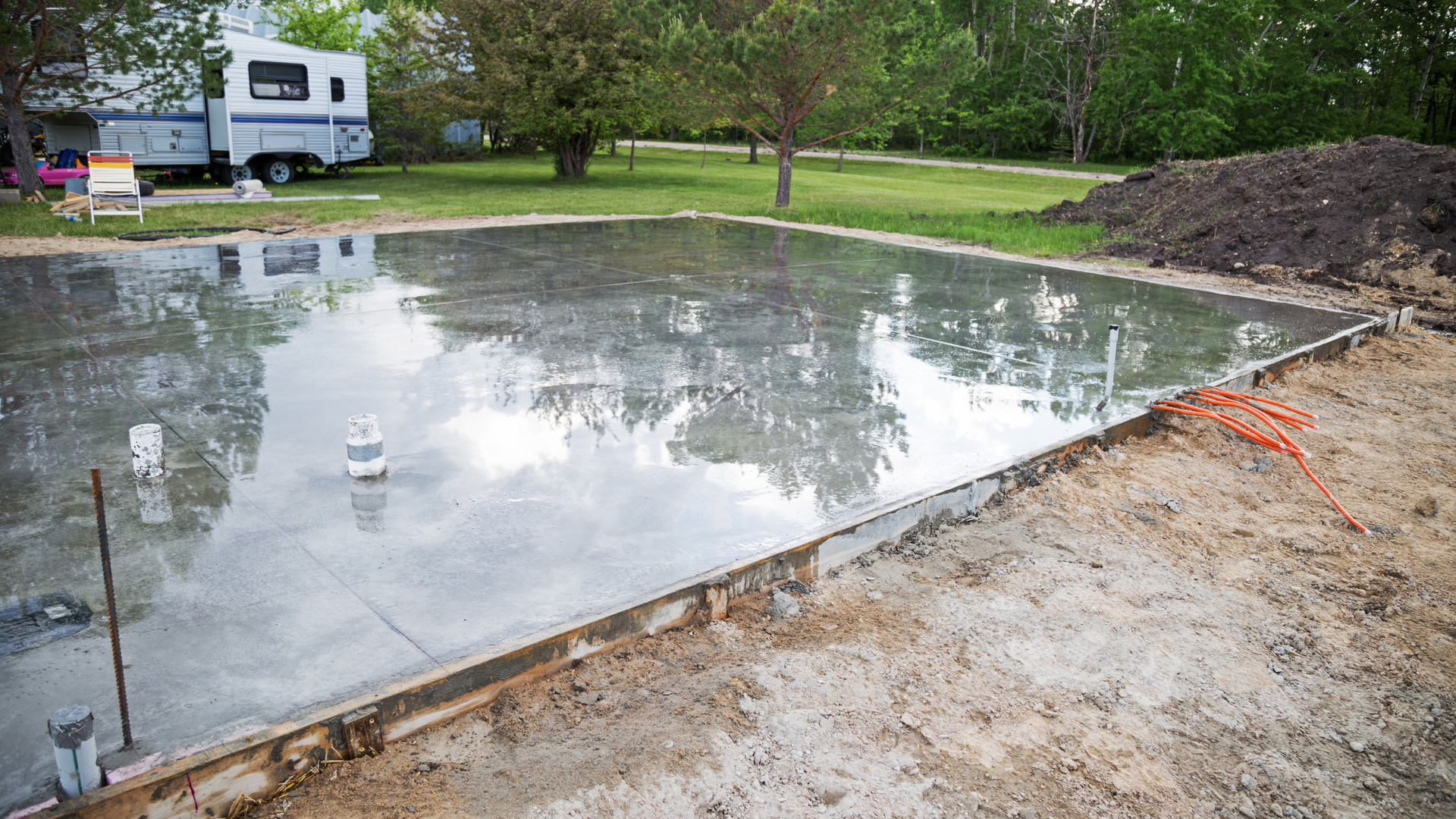
Proper site preparation is the defense here. A compacted, well-graded base and thoughtful drainage keep water from undermining the slab in the first place. This is exactly why the groundwork before the pour matters as much as the concrete itself. This is a point we cover in depth in our guide to concrete slab cost in Ocala, where site prep is a major cost and quality factor.
2. Tree Roots From Live Oaks and Palms
Ocala is beautiful in large part because of its mature trees: Live Oaks, laurel oaks, and various palm species shade nearly every established neighborhood. Those same trees are hard on concrete.
Tree roots are aggressive and often grow shallow, spreading outward just below the surface in search of water. When roots reach the edge of a driveway, patio, or sidewalk, they keep growing right underneath it. As a root thickens over the years, it lifts the slab from below, forcing structural cracks and creating raised, uneven sections that become trip hazards. Live Oak roots in particular are notorious for this because of how wide and shallow their root systems spread.
If you're planning new concrete near established trees, the placement, root barriers, and slab reinforcement all need to account for future root growth. An experienced local contractor knows which trees cause the worst problems and how to design around them.
3. Rapid Moisture Evaporation During the Pour
This one happens before you ever notice a crack, during installation itself. Concrete gains strength through a chemical process called hydration, which needs water and time. If concrete is poured on a blistering July afternoon without proper protection from sun and wind, the top layer loses its moisture far too fast.
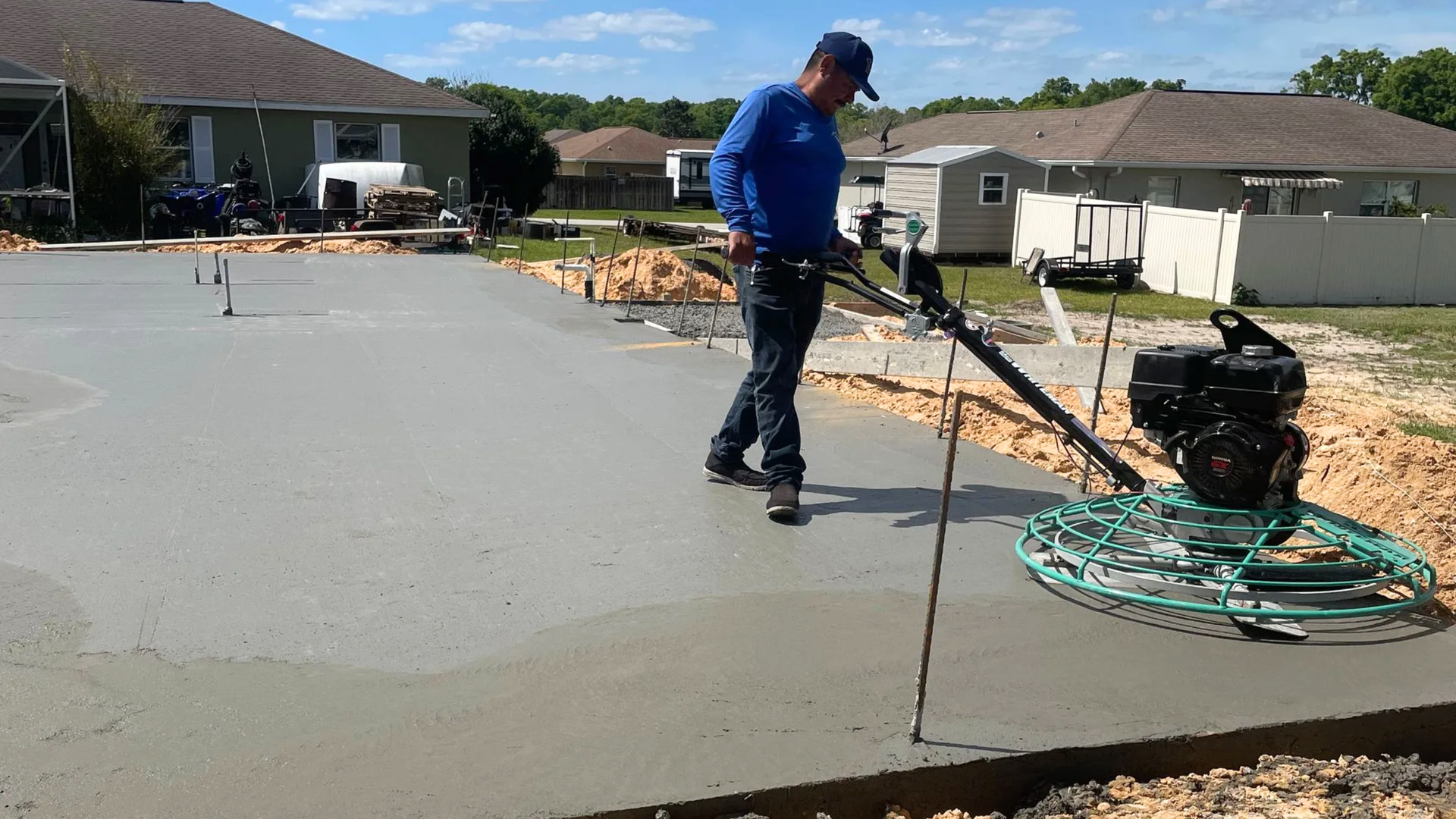
When the surface dries much quicker than the concrete underneath, it shrinks unevenly and pulls apart, creating a network of fine, interconnected "spiderweb" cracks called crazing. Rapid surface drying can also cause more significant shrinkage cracking. This is entirely preventable, but only if the crew times the pour correctly, uses curing compounds, and shields fresh concrete from Florida's heat and wind. Cutting corners on curing is one of the biggest differences between concrete that lasts decades and concrete that cracks in its first season.
4. Missing or Poorly Placed Control Joints
Those grooves you see cut into driveways and sidewalks aren't just decorative. Control joints are intentional weak points that tell concrete where to crack as it shrinks and moves. Without them, or when they're spaced too far apart, the slab decides on its own, and you get random cracks across the surface.
Correct joint placement is a basic part of good concrete work, yet it's often rushed or skipped by inexperienced crews. Proper jointing is one of the simplest, most effective ways to control cracking in Florida's expansion-and-contraction climate.
5. Heat Expansion and Contraction
Florida concrete bakes in summer and cools at night, expanding and contracting with every cycle. Large, unjointed slabs feel this stress the most. Over years of thermal movement, that repeated flexing works cracks into the surface, another reason joint placement and a quality mix design matter so much in our climate.
6. Weak Concrete Mix or Too Much Water on the Job Site
Concrete doesn't need much water to reach full strength, but water is often added on site to make it easier to pour and spread. That extra water weakens the finished slab and increases shrinkage as it evaporates. A driveway poured with a soupy, over-watered mix or a low PSI rating is far more likely to crack early. This is why the concrete mix and PSI should match the job, a topic worth discussing directly with your contractor before any pour.
Not All Cracks Are Equal: How to Read Your Concrete
Once you know the causes, you can start telling the difference between cracks that need attention now and cracks that are mostly cosmetic. Use the table below as a starting point, but remember that an in-person assessment is the only way to be sure.
| Crack Type | What It Looks Like | Usual Cause | How Serious |
|---|---|---|---|
| Hairline / crazing | Thin, shallow, spiderweb pattern on the surface | Rapid surface drying during cure | Cosmetic, rarely structural |
| Shrinkage cracks | Thin lines, often straight, appear early in slab's life | Concrete curing and drying | Usually minor |
| Settlement cracks | Uneven edges, one side lower than the other | Soil washout / voids under the slab | Moderate to serious |
| Heaving cracks | Slab lifted or raised, often near trees | Tree roots or expanding soil | Serious, trip hazard |
| Structural cracks | Wider than a credit card, run through the full slab | Void, overload, or foundation movement | Serious, needs a pro |
A quick field test many contractors use: if a crack is wider than a credit card, has vertical displacement (one side higher than the other), or is actively growing, treat it as a priority and get it evaluated.
Repair or Replace? How to Decide
If you're standing over an existing crack right now trying to decide your next move, this is the question that matters most. Here's a practical framework.
A repair usually makes sense when:
- The crack is narrow, stable, and hasn't changed in months
- There's no vertical displacement between the two sides
- The surrounding slab is otherwise sound and level
- The damage is isolated to one area rather than spread across the surface
A full replacement is often the smarter long-term choice when:
- The slab has multiple wide or through-cracks
- Sections have settled unevenly because of voids or washout underneath
- Tree roots have lifted and fractured large areas
- The concrete is old, spalling, or crumbling in addition to cracking
- Repeated patches have already failed
The trap many homeowners fall into is repairing the surface without addressing what's underneath. If a crack was caused by a void from soil washout, filling the crack does nothing about the empty space below, and the slab will crack again. A good contractor diagnoses the cause first, then recommends the fix that actually solves it. Sometimes that's a targeted repair; sometimes it's replacing a slab and correcting the base so the problem doesn't return.
| Factor | Lean Toward Repair | Lean Toward Replacement |
|---|---|---|
| Crack width | Hairline to narrow | Wider than a credit card |
| Number of cracks | One isolated area | Multiple across the slab |
| Displacement | Flat, even surface | One side raised or sunken |
| Slab age & condition | Newer, otherwise solid | Old, spalling, or crumbling |
| Underlying cause | Surface-level | Void, washout, or root damage |
| Cost over time | Cheaper short-term fix | Better long-term value |
If your driveway is the surface in question, our
concrete driveway services walks through how we handle both replacements and new installations, including the base prep and reinforcement that prevent future cracking.
How to Prevent Concrete From Cracking in Florida
Whether you're replacing a cracked slab or pouring brand-new concrete, prevention comes down to doing the fundamentals correctly. In Florida's climate, these steps aren't optional extras. They're the difference between concrete that lasts and concrete that fails.
Start with a properly compacted, well-graded base. Since sandy Central Florida soil shifts and washes, the subgrade must be compacted and leveled so it fully supports the slab. Drainage should direct water away from and around the concrete, not under it.
Use the right mix and PSI for the job. A stronger mix (commonly in the 3,000–4,000 PSI range for residential driveways and patios) with a low water-to-cement ratio resists cracking far better than a weak, over-watered pour.
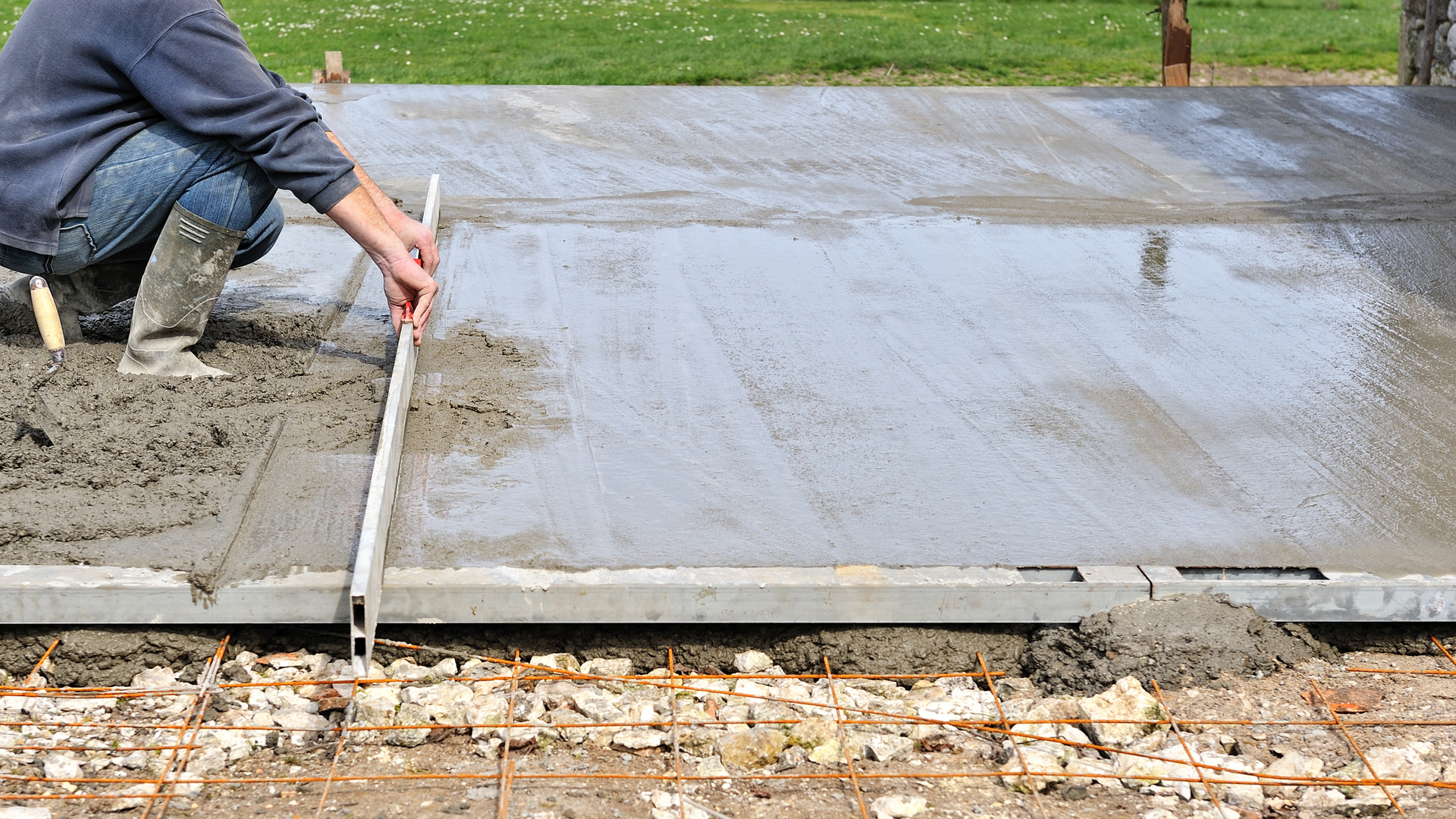
Reinforce the slab. Rebar or wire mesh, and fiber additives where appropriate, help hold concrete together and control cracking under load and movement.
Place control joints correctly. Well-spaced joints give the concrete planned places to move so cracks don't appear randomly across the surface.
Cure it properly. This is critical in our heat. Fresh concrete should be protected from sun and wind and kept moist as it cures. Skipping this in a Florida summer is the fastest way to get crazing and shrinkage cracks.
Seal it and keep up with maintenance. Sealing every few years protects against moisture, staining, and surface wear. Regular cleaning and inspection help you catch small issues before they grow. Our guide to concrete patio maintenance in Ocala covers sealing and upkeep in detail, and the same principles apply to driveways and walkways.
Choose the right slab type for the project.
For garages, sheds, and additions, the slab design itself affects long-term crack resistance, something we break down in our comparison of
monolithic vs floating concrete slabs.

Common Mistakes Ocala Homeowners Make
A few patterns come up again and again, and avoiding them saves real money:
- Filling a crack without diagnosing the cause. If there's a void underneath, the patch is temporary. Fix the base, not just the surface.
- Hiring the cheapest bid without asking about prep and curing. The savings vanish when the slab cracks in a year. Ask specifically how the crew handles base compaction and curing in the heat.
- Ignoring drainage. Water pooling against or under concrete is a leading cause of cracking in Florida. Grading and drainage should be part of the plan.
- Planting or pouring too close to aggressive trees. Root barriers and smart placement prevent heaving before it starts.
- Skipping the seal. An unsealed slab absorbs moisture and wears faster in our climate.
When to Call a Professional
Small, stable hairline cracks are usually fine to monitor and seal. But bring in a professional when you see cracks wider than a credit card, uneven or raised sections, cracks that keep growing, crumbling or spalling concrete, or any cracking that seems tied to a tree or a low, water-collecting spot. These often point to something happening beneath the slab that a surface patch won't solve, and catching it early is almost always cheaper than waiting.
A local contractor who knows Marion County's soil and trees can diagnose the real cause on site and tell you honestly whether a repair or replacement is the smarter investment.
The Bottom Line
Concrete cracks in Florida for reasons that are very specific to where we live: sandy subgrades that wash out under heavy rain, aggressive tree roots from our mature oaks and palms, and intense heat that dries fresh pours too fast. Most of these problems are preventable with proper base prep, the right mix, correct joint placement, careful curing, and ongoing maintenance. And when a crack does appear, the smartest first step isn't to grab a tube of filler. It's to understand what caused it, so you fix the actual problem instead of the symptom.
If you're dealing with a cracked driveway, patio, or walkway in Ocala and you're not sure whether you need a repair or a replacement, C1 Foundations can help. As a local, family-owned, fully licensed and insured Ocala concrete contractor with over 25 years of combined experience, we diagnose the cause on site and recommend the fix that lasts, with no pressure and no shortcuts. Contact us for a free estimate and get a straight answer about your concrete.
FREQUENTLY ASKED QUESTIONS